
Key Takeaway: Plaza Midwood is becoming denser and more polished, but its appeal still comes from the mix of historic homes, walkable streets, restaurants, nightlife, and independent businesses. For homebuyers, the neighborhood’s continued growth can add convenience and long-term appeal, but it also makes the exact street, property type, and surrounding development increasingly important.
Plaza Midwood Is Changing, but the Neighborhood Still Feels Distinct
Plaza Midwood has never been a neighborhood that stays exactly the same. The area developed from several smaller communities in the 1910s and 1920s, which is one reason its streets still have such a varied mix of architecture and lot styles.
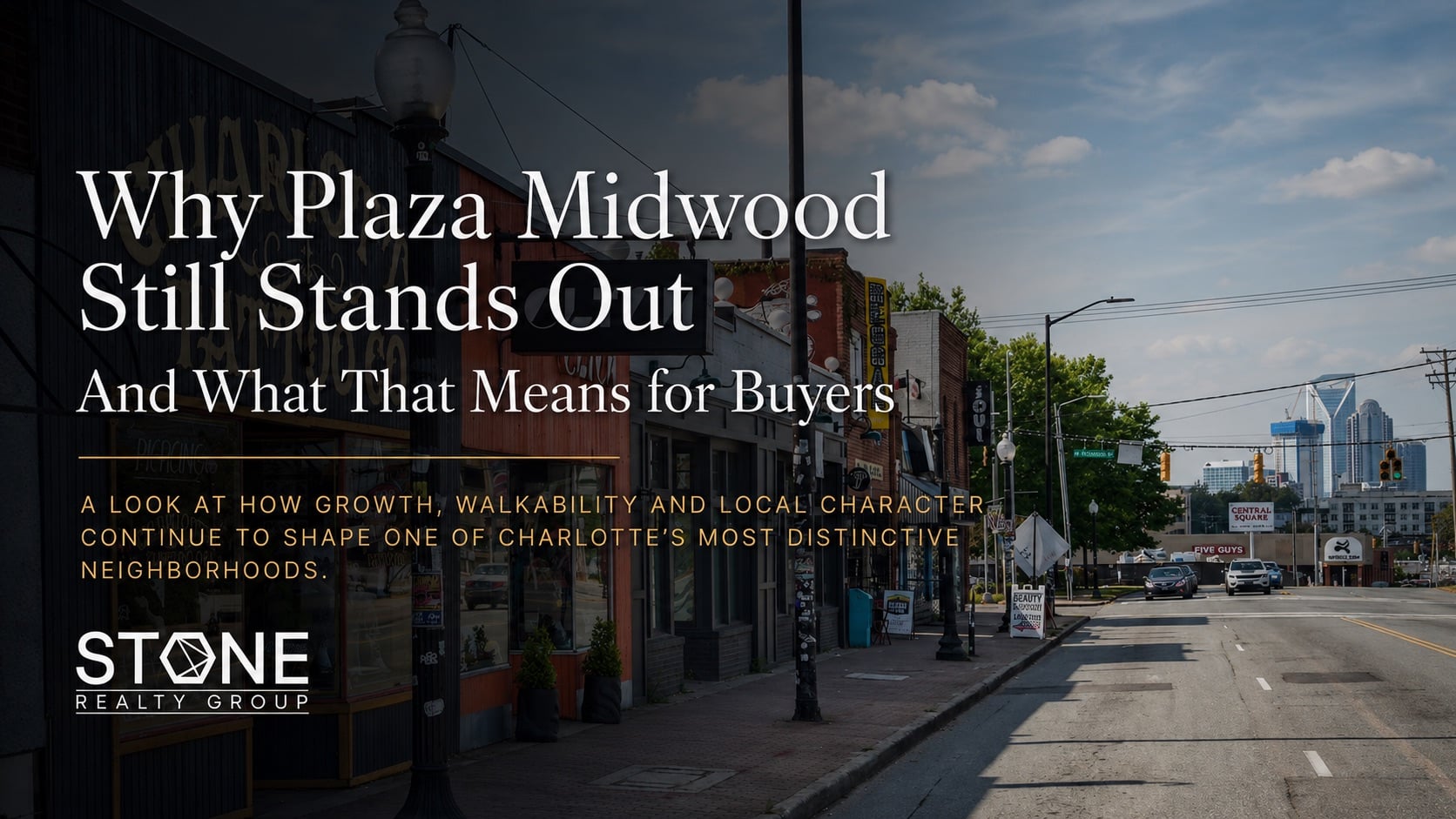
Today, that same neighborhood is seeing another wave of change. New apartments, restaurants, retail, and mixed-use projects are bringing more activity to Central Avenue and the surrounding commercial core, while established residential streets continue to offer bungalows, cottages, renovated homes, and newer infill construction.
The contrast is especially visible around Central Avenue, Pecan Avenue, Commonwealth Avenue, and The Plaza. Buyers can move only a few blocks and find a noticeably different balance of nightlife, walkability, traffic, historic character, and residential privacy.
Historic Character Still Matters
One of Plaza Midwood's biggest advantages is that new development is happening alongside an established residential neighborhood rather than on undeveloped land.
The City of Charlotte designated the Plaza Midwood Local Historic District in 1992 and describes it as the city's most architecturally varied historic district, with homes ranging from Victorian and Craftsman styles to bungalows, cottages, and mid-century houses.
For buyers, that history creates both appeal and additional due diligence. A historic bungalow near The Plaza can offer a very different ownership experience than a recently built townhome closer to Central Avenue. Buyers considering property inside the historic district should also understand how renovation and exterior changes may be reviewed by Charlotte's Historic District Commission.
Central Avenue Is Becoming More of a Destination
The commercial heart of Plaza Midwood has been evolving quickly. The Commonwealth development near Central and Pecan is adding another concentration of apartments, restaurants, and retail to an area that was already one of Charlotte's more active neighborhood districts.
That momentum is continuing in 2026. For nearby homeowners, that kind of investment can make everyday errands, dining, and entertainment easier to reach without driving across Charlotte. It can also mean more pedestrian activity, traffic, and redevelopment near properties that once felt farther removed from the commercial core.
Walkability Is Becoming an Even Bigger Part of the Value Proposition
Plaza Midwood's evolution is not only about new buildings. Charlotte has also leaned into the neighborhood's pedestrian-oriented character.
Plaza Midwood became Charlotte's first social district in March 2024. The City of Charlotte currently lists it as the city's only approved social district, operating daily from 10 a.m. to 10 p.m. within its designated boundaries. City officials have described the initiative as a way to encourage people to walk between neighborhood businesses and spend more time along the commercial corridors.
That walkability matters in a city where many neighborhoods still depend heavily on a car. Buyers who want quick access to Uptown Charlotte while still being able to walk to coffee shops, restaurants, breweries, boutiques, and neighborhood events often put Plaza Midwood high on their list.
What Plaza Midwood's Growth Means for Homebuyers
The biggest mistake buyers can make is treating Plaza Midwood as one uniform real estate market. Property type and location within the neighborhood matter considerably.
Pay Attention to the Exact Block
A home tucked along a residential street near Midwood Park may feel quiet and established, while a condo or townhome closer to Central Avenue may offer easier access to restaurants and nightlife. Neither is inherently better. They simply appeal to different lifestyles.
Look Beyond the House
When touring a property, consider what surrounds it. Nearby rezoning, redevelopment, vacant commercial parcels, traffic patterns, parking, and future construction can change how a property feels over time.
This is particularly important around Central Avenue and Pecan Avenue, where development activity is concentrated.
Compare Older Homes and Newer Construction Carefully
Historic and older Plaza Midwood homes often offer architectural character, mature landscaping, and established lots, but buyers should pay close attention to major systems such as roofing, electrical, plumbing, foundations, and HVAC.
Newer townhomes and infill properties may offer lower immediate maintenance and more modern floor plans, but buyers should compare HOA costs, parking, outdoor space, construction quality, and density.
Does More Development Mean Higher Home Values?
No individual project guarantees appreciation. What continued development can do is strengthen the amenities that keep buyers interested in a neighborhood.
Plaza Midwood combines proximity to Uptown Charlotte with an established residential base, recognizable neighborhood identity, restaurants, nightlife, and increasingly walkable commercial corridors. Those characteristics are difficult to recreate quickly elsewhere.
At the same time, homes within the neighborhood can perform differently depending on condition, lot, renovation quality, historic restrictions, surrounding development, and proximity to busy roads. Buyers should evaluate the individual property instead of assuming every Plaza Midwood home will respond to neighborhood growth in the same way.
Questions Buyers Ask
Is Plaza Midwood still a good place to buy a home?
It can be a strong fit for buyers who prioritize proximity to Uptown, walkability, restaurants, and an established neighborhood atmosphere. The bigger question is which part of Plaza Midwood best matches your lifestyle and whether you prefer an older home, newer infill property, condo, or townhome.
Are there still historic homes in Plaza Midwood?
Yes. Plaza Midwood includes a City of Charlotte-designated historic district with architecture spanning multiple eras. Buyers can still find bungalows, cottages, Craftsman homes, and other older properties mixed among renovated homes and newer construction. Should buyers be concerned about new development?
Development is not automatically a positive or negative. More retail and restaurants can improve convenience and walkability, while additional density can change traffic, parking, noise, and the feel of a particular block. Reviewing nearby projects before purchasing is especially important in a neighborhood evolving as quickly as Plaza Midwood.
More Plaza Midwood News & Insights
Considering a move to Plaza Midwood? Explore more from Stone Realty Group on buying, selling, and living in one of Charlotte's most distinctive neighborhoods:
Thinking about buying or selling in Plaza Midwood?
Stone Realty Group can help you compare Plaza Midwood homes, neighborhood options, recent sales, and upcoming development before you make a move. Connect with Stone Realty Group for local guidance tailored to your plans.
Check out this article next