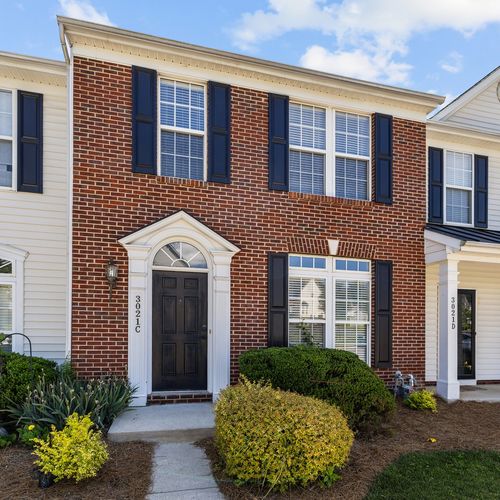


The Charlotte housing market looks very different from the frenzy of a few years ago. Inventory has increased, buyers are taking more time to decide and sellers have to compete more carefully on price and condition.
Yet demand has not disappeared. According to Canopy MLS's July 2026 market report, closed sales across the Charlotte region increased 1.6% year over year even as inventory grew 6.9% to 13,600 homes. That combination points to a market that is still active but gradually becoming more balanced.
Job Growth and Economic Diversity Still Support Charlotte Housing
Charlotte's economy remains one of the reasons housing demand has held up despite higher mortgage rates and greater inventory.
The Charlotte Regional Business Alliance reports that regional employment has grown approximately 24% over the past decade. The region now supports major employment concentrations in financial services, advanced manufacturing, technology, life sciences and logistics.
Financial services remain particularly important, with more than 100,000 people employed in the sector. At the same time, Charlotte's economy has broadened beyond banking. Technology, medical technology, advanced manufacturing and logistics have become increasingly significant parts of the regional employment base.
That economic diversity does not guarantee housing appreciation, but employment growth can help support household formation and housing demand across different parts of the metro.
Population Growth Continues Across Charlotte and the Metro
Charlotte is also continuing to add residents.
According to the U.S. Census Bureau's latest city population estimates, Charlotte gained 20,731 residents between July 2024 and July 2025, the largest numerical increase of any U.S. city during that period.
Growth is occurring outside the city limits as well. Communities throughout the Charlotte metro continue adding residents, which helps explain why housing demand is spread across Mecklenburg County and surrounding markets such as Fort Mill, Huntersville, Matthews, Concord and other regional employment corridors.
Population growth should not be interpreted as a guarantee that every home or neighborhood will appreciate. It is one factor among mortgage rates, housing supply, property condition, taxes, new construction and neighborhood-level demand.
More Inventory Is Changing the Charlotte Housing Market in 2026
The biggest difference for buyers and sellers in 2026 is supply.
Canopy MLS reported 3.7 months of housing supply across the Charlotte region in July, up from the previous year. Mecklenburg County inventory increased 13.1%, while City of Charlotte inventory climbed 15.8%.
More listings mean buyers can compare properties rather than feeling pressure to pursue every new home immediately. Sellers across the region received an average of 96% of their original asking price in July, another sign that negotiation has returned to the market.
For buyers, that may create opportunities to negotiate price, repairs, closing costs or other contract terms depending on the property.
For sellers, it means pricing accurately and preparing the home carefully matter more than relying on general Charlotte population growth to generate an offer.
Climate and Property Risk Should Be Evaluated Home by Home
Some relocating buyers compare Charlotte's weather and environmental risks with those in other parts of the country, but Charlotte should not be described as free from climate or natural-hazard concerns.
Flooding is one example. Charlotte-Mecklenburg Storm Water Services specifically advises residents that flooding can occur even outside regulated floodplains and provides property-level flood maps and risk tools.
Buyers should evaluate flood zones, insurance, drainage, trees and other property-specific considerations during due diligence rather than assuming one part of the Charlotte region carries the same risk as another.
Frequently Asked Questions
Is the Charlotte housing market still strong in 2026?
Charlotte remains active, but the market is more balanced than it was during the low-inventory years. Regional closed sales increased 1.6% year over year in July 2026 while inventory increased 6.9%, giving buyers more choices without eliminating demand.
Is Charlotte still growing?
Yes. The U.S. Census Bureau estimated that Charlotte added 20,731 residents between July 2024 and July 2025. Growth is also occurring in several surrounding communities throughout the broader metro.
Does Charlotte's job and population growth guarantee rising home values?
No. Employment and population growth can support housing demand, but individual property values depend on many factors, including supply, mortgage rates, condition, location, taxes, new construction and neighborhood-specific market activity.
More Charlotte Market & Growth Insights
Explore more Stone Realty Group coverage of the factors shaping Charlotte real estate in 2026:
Planning a Move in the Charlotte Housing Market?
Charlotte's employment base and continued population growth provide important context, but today's real estate decisions still need to be made property by property. Buyers now have more inventory to compare, while sellers face more competition than they did a few years ago.
If you are considering buying, selling or relocating within the Charlotte region, connect with Stone Realty Group for a strategy based on current neighborhood-level pricing, inventory and market conditions.
Check out this article next