

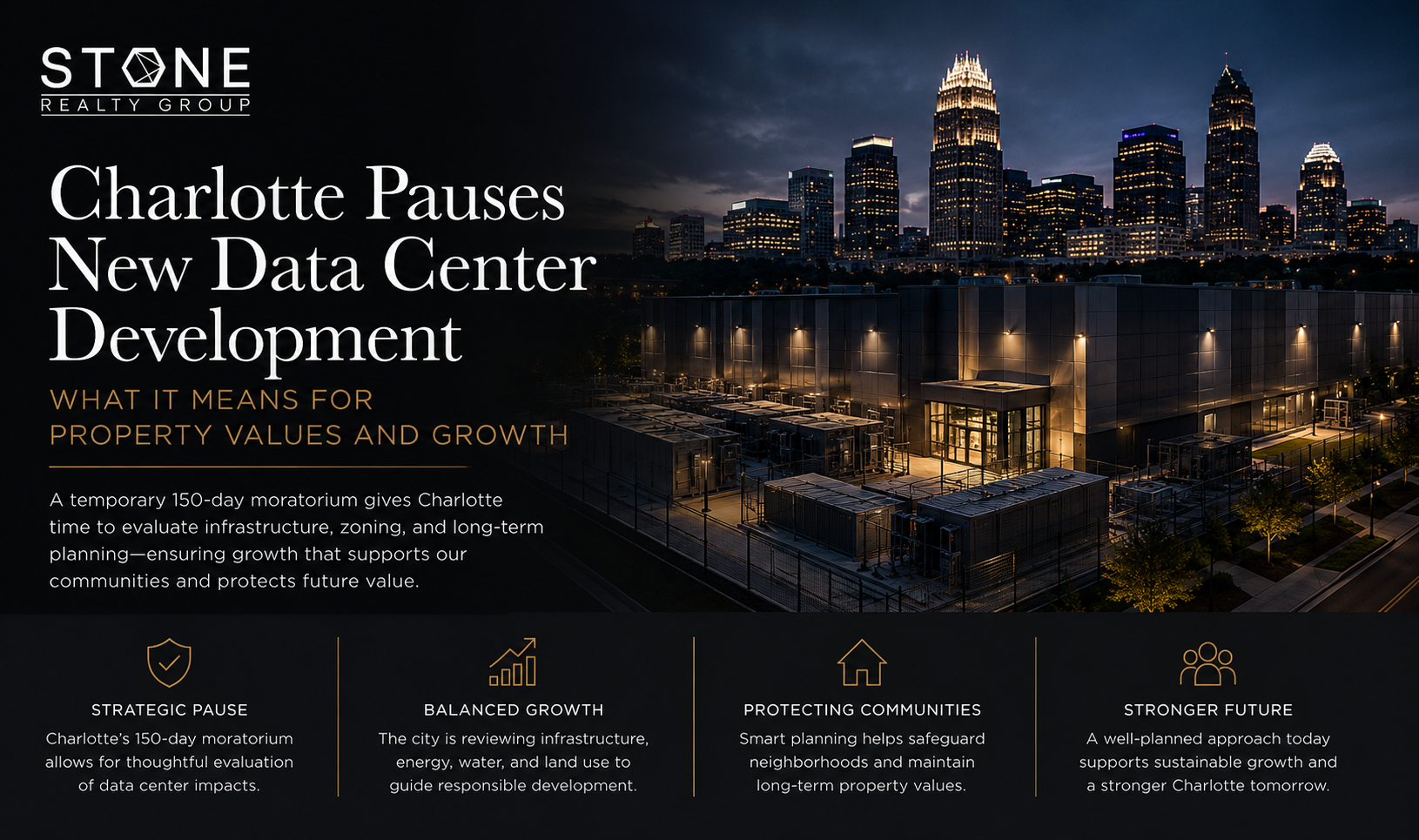
Charlotte’s Data Center Pause Is Making Headlines, but What Does It Mean for Real Estate?
Charlotte City Council unanimously approved a temporary 150-day moratorium on new data center applications while city leaders evaluate infrastructure impacts, neighborhood compatibility, and potential changes to development standards.
The pause began on June 8, 2026, and is scheduled to end on November 5, 2026. Data centers that were already approved or had submitted qualifying applications before the moratorium may continue moving forward.
At first glance, this may sound like a niche technology story. In reality, it raises important questions about Charlotte’s future growth, land use, utility capacity, environmental planning, and neighborhood development.
For homeowners, buyers, and investors, understanding how major infrastructure decisions affect land use can provide valuable insight into where Charlotte may be headed next. The City of Charlotte’s data center moratorium FAQ provides additional information about the pause and public engagement process.
Why Charlotte Is Reviewing Data Center Growth
Data centers support cloud computing, artificial intelligence, streaming services, telecommunications, and everyday business operations. As demand for digital infrastructure grows, developers have shown increasing interest in building large data facilities throughout the Charlotte region.
City leaders approved the temporary pause to study concerns involving:
- Electricity and infrastructure capacity
- Water consumption
- Noise and continuous operations
- Environmental impacts
- Proximity to residential neighborhoods
- Land availability and compatible zoning
The purpose is not necessarily to prevent all future data center development. The city is using the moratorium period to study these facilities, gather public feedback, examine how other communities regulate them, and consider clearer development standards.
What the Moratorium Does and Does Not Do
During the moratorium, Charlotte is not accepting applications for new data centers. However, existing facilities may continue operating, and projects that were approved or otherwise exempt before June 8 may continue through development.
The moratorium also does not pause residential construction, commercial projects, or previously approved rezoning decisions unrelated to data centers.
City staff and a dedicated task force are expected to study possible policy recommendations during the pause. If changes are recommended, City Council may consider action near the November 5 end date.
What This Could Mean for Charlotte Neighborhoods
Unlike offices, retail centers, or mixed-use developments, data centers typically generate limited daily foot traffic and do not directly create large residential populations. However, they can influence how land is used and where other development may occur.
Large facilities may compete with residential, industrial, or commercial projects for land and infrastructure capacity. Their placement can also raise questions involving noise, visual buffers, traffic during construction, and proximity to existing neighborhoods.
Growth corridors such as University City, North Charlotte, and areas near major transportation and industrial routes may remain central to these discussions. Buyers considering properties near proposed or existing data centers should review zoning, development plans, and nearby infrastructure carefully.
For established neighborhoods such as SouthPark, Ballantyne, Myers Park, and Dilworth, the moratorium is unlikely to produce a direct or immediate effect on home values. Any long-term influence will depend on the policies Charlotte ultimately adopts and where future facilities are permitted.
How Economic Development Can Affect Housing Demand
Charlotte continues attracting investment across finance, healthcare, manufacturing, logistics, and technology. That broader economic growth can support employment, population growth, and long-term housing demand.
Data centers themselves typically create fewer permanent jobs than office campuses, hospitals, or manufacturing facilities of a similar scale. Their real estate impact may therefore relate more to land use and infrastructure demand than to direct housing demand from employees.
For buyers and investors, the type of development matters. A project’s location, employment impact, infrastructure requirements, and compatibility with nearby housing should all be considered before drawing conclusions about its effect on property values.
The Bigger Picture for Charlotte Buyers and Sellers
The temporary pause reflects a larger challenge facing Charlotte: how to accommodate economic growth while protecting infrastructure capacity and neighborhood quality of life.
As the city expands, decisions involving transportation, utilities, technology, zoning, and land use will help shape future neighborhoods and housing opportunities.
At Stone Realty Group, we monitor development and infrastructure trends because today’s planning decisions can influence tomorrow’s housing supply, neighborhood demand, and investment patterns.
Frequently Asked Questions
Will the data center moratorium affect Charlotte home values?
For most homeowners, any immediate effect is likely to be limited. The moratorium applies to new data center applications rather than residential development. Longer-term effects will depend on the policies adopted and the locations of future facilities.
Does the moratorium stop every Charlotte data center project?
No. Existing data centers may continue operating, and projects that were approved or otherwise exempt before the moratorium began may proceed. The city is temporarily not accepting new applications.
Why are data centers important to Charlotte’s economy?
Data centers support digital services used by businesses, consumers, cloud platforms, and artificial intelligence systems. They can bring investment and strengthen technology infrastructure, although they generally create fewer permanent jobs than some other large developments.
Could the pause affect future development in Charlotte?
Potentially. The city is reviewing where data centers should be permitted and what standards may be needed to address infrastructure capacity, noise, environmental concerns, and neighborhood compatibility.
Stay Ahead of Charlotte’s Changing Real Estate Market
Stone Realty Group provides local insight into neighborhood growth, infrastructure projects, economic development, and housing opportunities throughout Charlotte and the surrounding communities.
Explore Charlotte homes for sale or contact Stone Realty Group to discuss your buying, selling, or investment goals.
Check out this article next